


The Story of Cville's Tech Unconference
How a backyard meetup became beCamp
Genesis
It started with Foo Camp
In 2003, Tim O'Reilly held an invitation-only conference on the future of technology called Foo Camp, built on the Open Space Technology approach: a simple way to run productive meetings for anywhere from five to 2,000+ people.
Open Space runs on four principles:
- • Whoever comes is the right people
- • Whatever happens is the only thing that could've
- • When it starts is the right time
- • When it's over, it's over
And one rule of movement: the Law of Two Feet, meaning anyone's free to walk to whatever discussion they actually care about.
Foo Camp was invite-only. In 2005, BarCamp launched in Palo Alto as its open, anyone-welcome counterpart.
Local Roots
Meanwhile, in Charlottesville
Around the same time, a group of UVA employees started a meetup called beTech, trying to bring one technologist at a time into a more modern software mindset. UVA's developers were largely siloed then, and this group often met during the workday instead of after.
beCamp broke off from beTech, inspired by BarCamp. The first one happened in 2006, in the backyard of local technologist Steve Stedman. Up until 2018's rebrand, beTech's logo was the only thing left connecting the two.
From 2007 until becamp.org existed, beCamp ran off a wiki hosted at barcamp.org/becamp.
Philosophy
Sharing makes it better
Former organizer Ron DuPlain describes two rules that keep a room running well:
[1] Whatever topic the room cares about most is the one being discussed
[2] Whoever has relevant perspective gets the floor
The result: even a presenter who isn't the room's top expert usually gets useful input from someone else in the crowd, something that rarely happens at a traditional conference.
Iteration
An evolving format
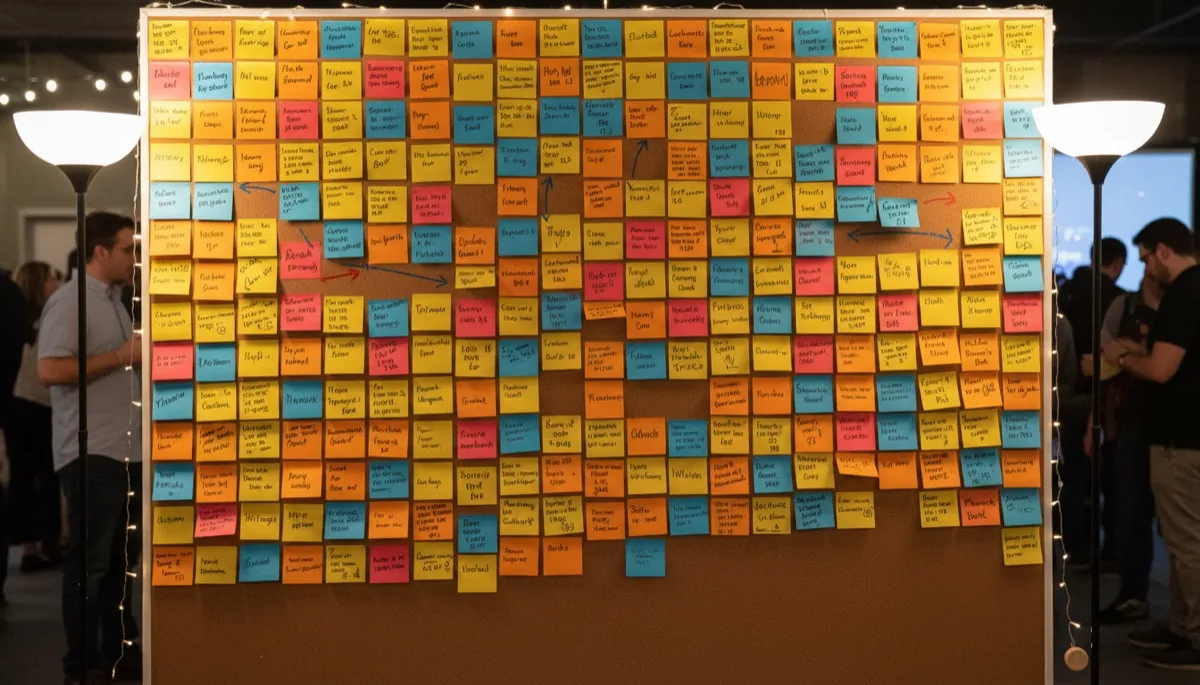
beCamp keeps iterating. Some ideas stick, some don't. The Present, Learn, Share labels on pitched topics came from Ron DuPlain, based on two years of retrospective feedback, after realizing an up-vote alone didn't guarantee a good session; sometimes no one in the room was an expert, sometimes a "presenter" actually wanted a discussion instead.
beCamp has also spawned its own offshoots. Many people wanted a beCamp more than once a year, but twice a year was too much given the planning involved. Ron DuPlain started beSwarm in 2010 with John Chapin, first held that February; it's the spirit of beCamp's Friday night, minus the pitches, run on a Saturday.
beSwarm led to beCraft in 2012, a software-craft meetup Stuart Leitch started from emails collected at that year's beSwarm, with early help from Al Tenhundfeld and later Cushing Whitney. It no longer meets, but it inspired several other tech meetups still running today.
The Cville Slack team also traces back to beCamp: it began at the 2015 retrospective, when the group decided to migrate its existing IRC community to Slack. That community now has over 1,000 members.
Impact
A community of practice
beCamp stays a single annual event, but the community that runs it also backs several meetups and gatherings throughout the year. beCamp and beSwarm both grew out of tech, but the mission driving them, collaboration and inclusivity, reaches well past technology alone.
October 2–3 in Charlottesville, VA
Join us in October of 2026
Quick and easy, and guarantees we get your shirt size right.